Adapted from an interview that appeared in CanadianSME Magazine.
A retirement built for a few years
When Canada built its public pension system, retirement was imagined as a short chapter. Benefits began at an age when most people had only a handful of years still ahead of them, and those years were pictured as a quiet wind-down after a long working life.
That picture no longer fits how Canadians live. A person turning 65 today can expect, on average, another twenty years or so, and because that is an average, a great many will live well past it. Canada now counts more than twelve thousand centenarians, and the number of people aged 85 and over is expected to more than triple in the coming decades. For anyone retiring now, planning for thirty years or more is simply sensible rather than cautious.
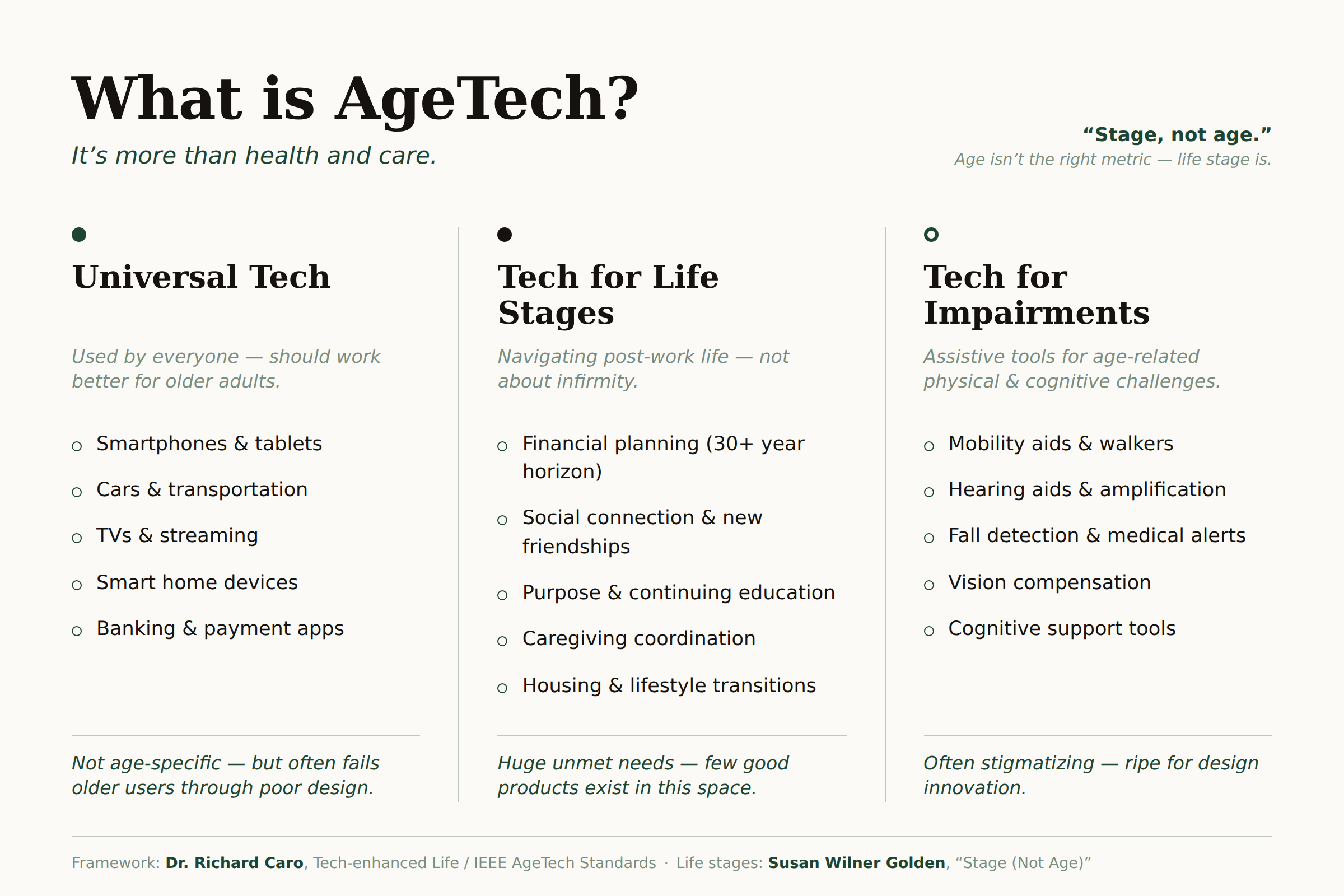
The deeper change is in how those years are lived, not only in how many there are. The extra time has created a stage that barely existed a few generations ago. It begins when full-time work ends and lasts until daily life calls for more support, which can be most of those years, and almost nothing around it was designed with that stage in mind.
A new stage, not a longer old age
Consider what this stage looks like in practice. A woman of 68 consults three days a week for her former employer, helps her 92-year-old father move into a retirement community, and picks up her grandchildren every Friday. A couple of 71 sells the family home and wants something smaller and closer to the things they care about, somewhere that suits the life they have now. Others go back to school, start a small business, take the long trip they postponed for decades, or give their time to a cause that matters to them.
Needs also shift gradually within the stage. The early years can feel like midlife with more freedom, although the first months bring one abrupt change that often goes unplanned for: the daily contact with colleagues that filled most weekdays for forty years falls away all at once. Later, small changes in hearing, balance, energy, and eyesight make ordinary things a little harder without changing who anyone is. Most businesses see only the two ends of this range: the active retiree in the brochure and the person who needs daily care. The long middle, where most of the years and much of the spending sit, is largely ignored.
The generation now entering this stage has rarely accepted products that weren't designed for them. Baby boomers reshaped housing, retail, and travel as they moved through each stage of life, and there is little reason to think they will accept a later life designed around someone else's assumptions.
Where the design gaps are
Housing. Most Canadian homes were built for families raising children, with stairs, bathtubs, and suburban locations that assume everyone drives. For many older adults the realistic choice today is to stay put or move into a retirement community. What sits between those two is still hard to find: smaller homes near shops and services, homes that adapt as needs change, shared living arrangements, and services that come to the neighbourhood instead of requiring a move. Builders, renovators, and property managers who fill that middle ground will find ready customers.
Work and money. Most financial products assume income stops at 65 and savings are drawn down over the years that follow. In reality, income now tends to taper through part-time and contract work, sometimes restarting after a break, while savings have to last thirty years or more. Money also moves across generations in both directions, as the same people help their adult children with a first home while paying toward their parents' care. Planning tools, insurance, benefits, and payroll built for a gradual exit rather than a sudden stop are still rare. So are employers who know how to keep experienced people on flexible terms.
Everyday products and services. Much of what is designed for older adults looks medical and is aimed at the adult child who buys it, which is a large part of why it ends up in a drawer. The better opportunity lies in ordinary products that are easier for everyone to use, such as clearer type, simpler setup, packaging that opens without a struggle, and clothing and footwear that account for changing balance and dexterity. Travel and leisure designed for longer stays and a gentler pace, with accessibility built in quietly rather than advertised, fit the same pattern.
Technology. The most useful technology for this stage makes daily life simpler rather than adding another thing to manage. It helps someone keep driving safely for longer, follow a conversation in a busy restaurant, or coordinate a parent's appointments from another city. It works with the devices people already own, and it connects people rather than simply watching over them.
Connection and purpose. For most people the workplace supplies the bulk of their social contact, and when work ends that contact tends to fall off a cliff, with little designed to replace it. At the same time, longer, healthier lives leave people wanting to stay useful, whether through work, volunteering, mentoring, or learning. Clubs and classes, shared housing, community organizations, and services that match people's skills to real needs all have room to grow here, because in later life being needed and being known turn out to matter as much as comfort.
Why businesses miss it
Two habits keep most businesses on the sidelines. The first is filing aging under healthcare. Businesses outside health then treat the market as someone else's concern, and those inside health treat it as a problem to be managed rather than a customer to be served. The second is designing for the pitch rather than for the person, which produces ideas that look convincing in a presentation and fall apart in daily life. The remedy is the same in every sector: start with how people actually live, test ideas where they will be used, and design products that let people do more of what only people can do.
Canada's position
Canada is well placed to lead. Its diverse population mirrors the way the world is aging, and its mix of public and private systems pushes new ideas to be practical and affordable from the start. Institutions such as McMaster University, the University of Waterloo, and the University of Toronto produce strong research in both technology and health. The Schlegel-UW Research Institute for Aging brings research directly into real care settings, and AGE-WELL, through programs such as AgeTech LaunchPad Toronto, helps founders turn ideas into businesses. Most of the companies that will serve this stage of life will be small and local, close enough to their customers to understand what they actually need.
For anyone exploring this market, AgeTech Labs maintains three community tools, free to use. AgeTech Intel maps where the real needs and opportunities are, Scout tests whether a product fits how elder living works day to day, and Morfic works through what changes once a technology is in place.
The extra years have already arrived. What remains open is who will design the life that fills them.