Walk through any elder living community and count the systems running the day. One for dining. One for activities. One for family communication. One for scheduling staff. One for the front door. Nurse call. Maintenance. Move-ins. Each one works — mostly. Almost none of them talk to each other.
The dining system doesn't know a resident left on an outing. The family app doesn't know what was served at lunch. The activities calendar doesn't know the bus is delayed. And at the end of the month, someone assembles the real picture of the community the way it has always been assembled: by hand, in a spreadsheet, from six different exports.
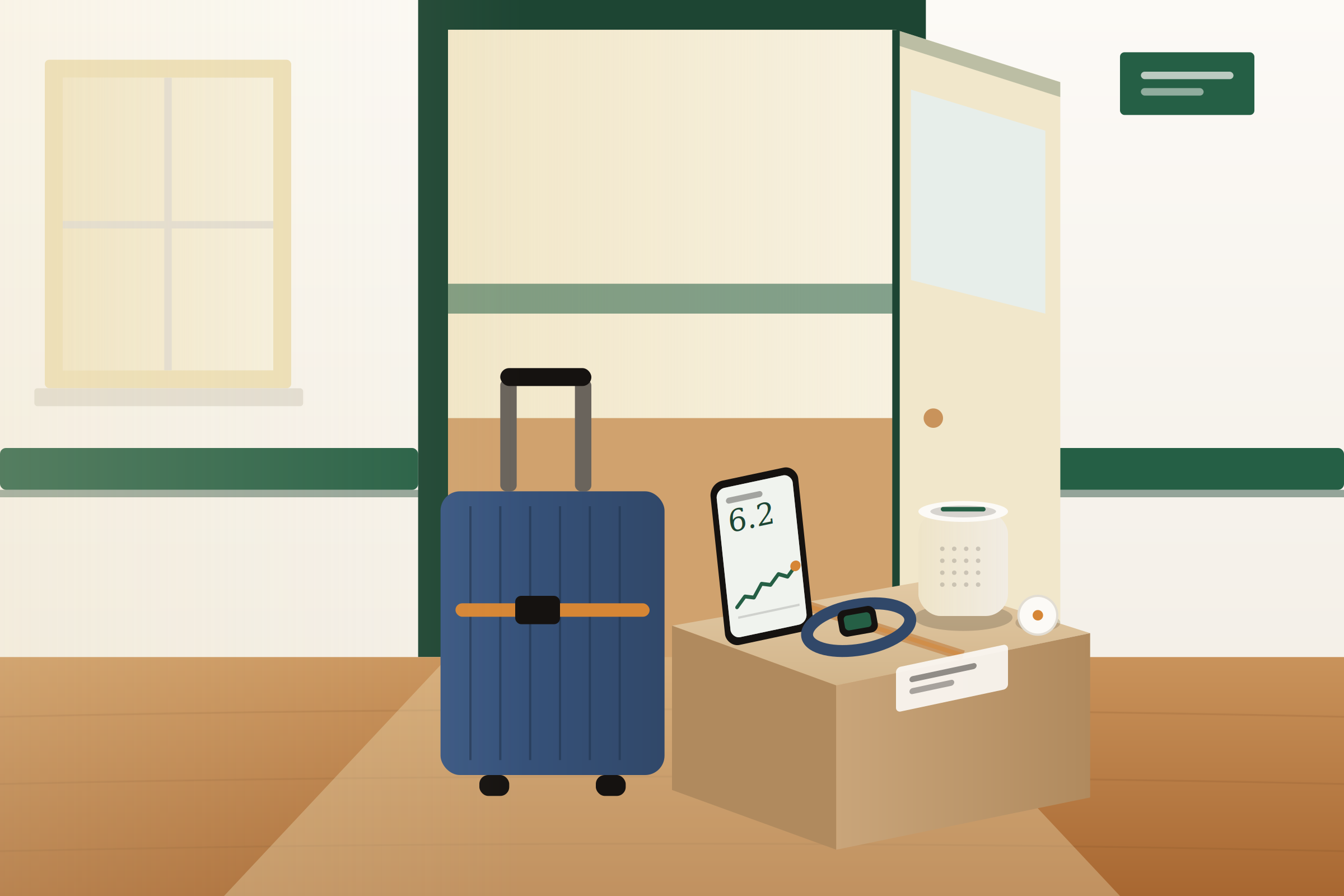
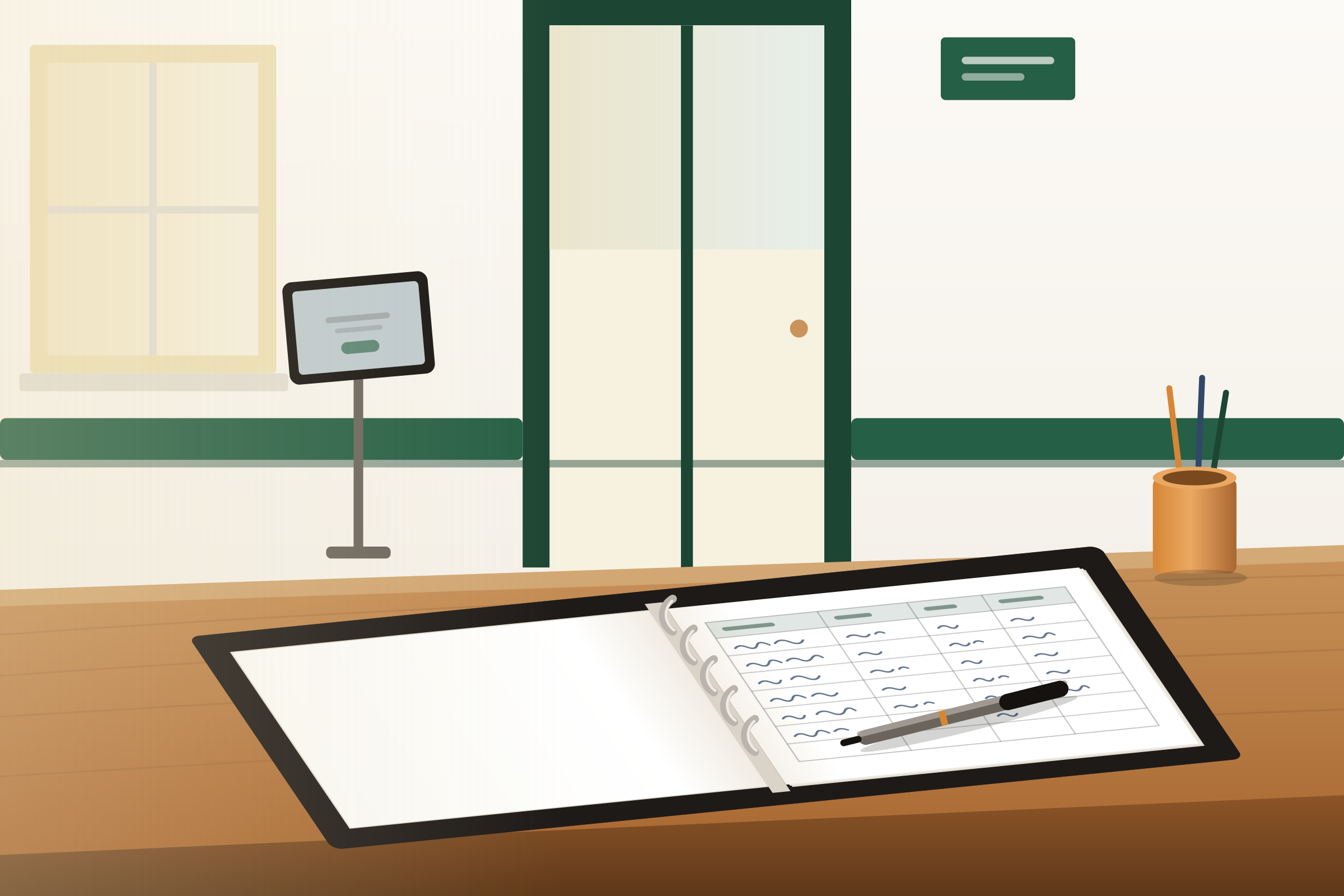
Here's the part that surprises people from other industries: it's not that connecting these systems is expensive. It's that the assumption underneath the question is wrong. We talk as though every control point in a community — the place where the real answer lives and someone is responsible for it — is already digital, and the only job left is to wire them together. Walk the floor and the picture is different. The sign-out that matters, the one the nurse relies on, is often a binder at the neighbourhood desk. The tablet at the front door is the courtesy copy.
That's not a failure. It's a rational choice. The binder is doing a job, and doing it well. It sits beside the person who is accountable, costs nothing to use, and never asks for a password. The digital version was justified on risk — the evacuation list, the audit trail — and risk is a once-a-year motivator. Friction is an every-shift motivator. A system that adds thirty seconds and gives nothing back before the end of the shift will lose to paper, whatever the policy says. Any product that wants to replace the binder has to do its job better on a Tuesday, not just look better in an audit.
So many communities aren't one step from integrated. They're two. The control point has to become digital before it can be connected, and it will only become digital when the digital version is more useful in the day than the paper one. That's the bar, and it's the bar a standard actually clears: when recording something once means dining, activities, and the front door all know it, the digital act finally pays the person doing it. Until then the data stays where it lands. Staff enter it three times. Residents and families tell their story to every department. Everyone works around the gaps, because working around the gaps is the job.
Other industries hit this same wall and got past it — not with heroic integration projects, but with standards. Banking didn't wire every bank to every other bank; it agreed on common rails, and now money moves between institutions that have never met. Your phone charger works in your neighbour's car because an industry agreed on a connector. The pattern repeats: when everyone speaks one language, nobody has to build a translator for every conversation.
Senior living is now getting its version.
What ELOA is
ELOA — Elder Living Open Architecture — is a vendor-neutral interoperability standard for senior living operational technology, in development as CAN/DGSI 143 through the Digital Governance Standards Institute (DGSI), an SCC-accredited standards development organization. It was approved for active standards development in May 2026, and it's on the path to becoming a National Standard of Canada.
In plain terms: ELOA defines a common way for the systems in a community to announce what's happening — a move-in, a meal, an event, a sign-out, a maintenance request — so that any other system the operator chooses can listen and react. Systems publish events; systems subscribe to events. No custom bridge per pair. One language.
Two boundaries matter, and they're deliberate.
ELOA covers the operational layer, not the clinical one. Clinical data already has serious standards and institutions behind it — HL7 FHIR, interRAI, CIHI. ELOA doesn't touch any of that. It handles the hospitality and operations side of a community: the layer that has never had a standard of its own. The two are complementary. Freeing the operational layer to work properly is what lets clinical systems focus on clinical work.
ELOA is vendor-neutral by construction. It's being developed through a formal, consensus-based standards process with a technical committee — not by any single company, and not as a product anyone sells. During the exploratory phase, more than thirty organizations across operators, vendors, associations, and research signalled interest in the work. That breadth is the point: a standard only works if it belongs to everyone.
What it means if you operate communities
You don't have to do anything today — and participation in the standard costs operators nothing. But the arrival of a standard changes your position over time:
Your control points can finally move off paper. Not because a policy says so, but because recording something once and having the rest of the building hear it is less work than the binder, not more. That's the only way the move ever sticks.
Your systems become choices, not marriages. When products interoperate through a standard, you can pick the best dining system and the best family app and expect them to work together — and replace either one later without starting over. That's the difference between building with Lego and building with glue.
Your procurement gets a new question. As conformance testing matures, "does your product conform to CAN/DGSI 143?" becomes a checkbox in an RFP — the way asking about privacy or security standards is normal today. One question, asked by enough operators, moves an entire vendor market.
Your data starts compounding. When operational events flow in a common format, the monthly spreadsheet assembly starts disappearing — and the real picture of the community becomes something you can actually see.
What it means if you build for senior living
Build once, interoperate. Instead of a bespoke integration per customer per system, you implement the standard and connect to everything else that speaks it. For smaller vendors especially, that's the difference between competing on your product and competing on your integration budget.
Installed is not the same as used. A product can be on every tablet in the building and still not be the control point. The standard gives you a way to change that: when your product is where the information gets recorded once and passed everywhere, it earns the spot the binder holds today. Vendors are validating the standard now through pilot conformance sessions, and that work is what will make "ELOA conformant" mean something checkable rather than a logo on a slide.
Where it stands, honestly
ELOA is in active standards development — which means the technical committee is doing the unglamorous work of getting event definitions, conformance criteria, and security requirements right. Standards development is deliberately slow, deliberately consensus-based, and deliberately boring. In this context, boring is good: it's what makes the result trustworthy enough for risk-averse operators, vendors with real market positions, and government to build on.
One disclosure, so you know where I sit: I chair the technical committee developing this standard. That's exactly why I'm careful to say the committee owns it — not me, and not any company. My interest is the one I've written about here for years: senior living technology that actually works together, chosen freely by the people who run communities.
The standard's home is eloa.dev. If you operate communities, there's nothing to require yet, but there's a question worth asking your vendors: are they involved in ELOA? If you build for this industry, the answer should be yes, and the door to the technical committee is open.
The fragmentation was never anyone's fault. Fixing it is now everyone's opportunity.