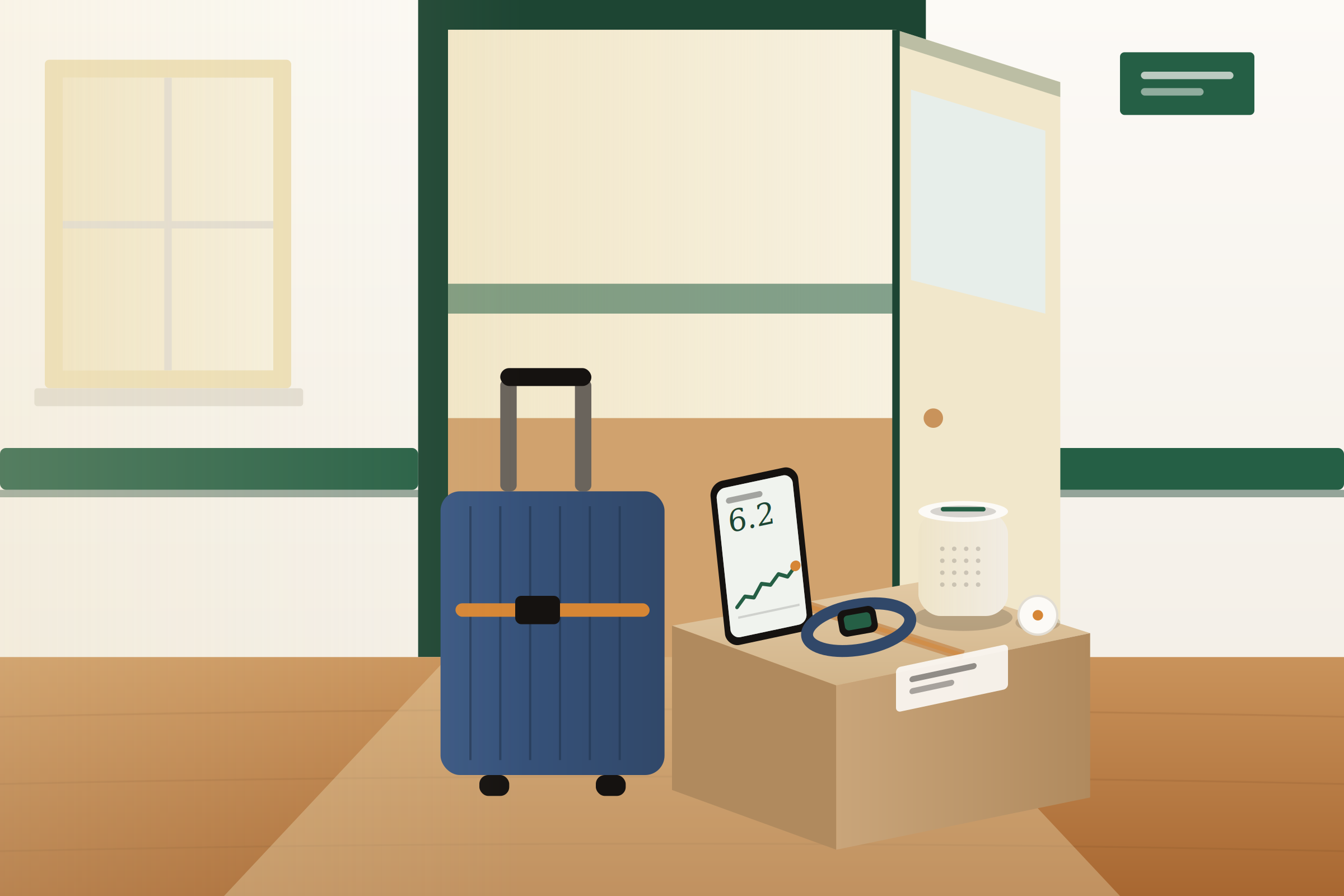
A resident moves in wearing a continuous glucose monitor that has been on her arm for two years. The readings go to her phone and to her daughter's phone three provinces away. She knows what the numbers mean and what to do when they drift, and the device is as much a part of her routine as her reading glasses.
Nobody in the community procured this device, evaluated it, contracted for it or deployed it. It walked in the door on move-in day already configured and trusted, and already producing a continuous picture of her health that the community has no equivalent of.
She has already decided. The question is whether the community has.
Yes, no, or paralysis
For decades, technology entered long-term care and retirement communities one way, which was that the operator chose it. Every system in the building went through someone's evaluation, someone's budget and someone's rollout plan, and the whole industry, from procurement and policy to IT and risk, is built on the assumption that the operator controls what technology is present.
That assumption is expiring. Residents are arriving with wearables, glucose monitors, smart speakers, video doorbells, medication reminders and increasingly capable AI companions on their phones and tablets. The robots will come later, but the pattern is already here, and a useful name for it is BYOB: bring your own bot, band or biosensor.
A community has three available responses. It can say yes, which means welcoming the device, connecting it where that makes sense and using what it offers. It can say no, which means prohibiting or ignoring it and quietly hoping the family doesn't push. Or it can do what most communities do today, which is nothing at all: no policy, no intake question and no position, so that the device is in the building but officially doesn't exist.
That third response, paralysis, feels safe, but it is actually the worst of the three because it produces the risks of "yes" with none of the benefits. The data still flows to the family and to the device maker, just never to the people providing care. The consent questions still exist, but nobody asks them. Staff still encounter the device, but they have no guidance on what to do about it.
The opportunity that arrives for free
It is worth starting with the part that usually gets skipped, which is that this is a large opportunity and the community doesn't pay for it.
The device is already adopted. The hardest problem with technology in these communities is getting a resident to actually use it, and here that problem is solved before move-in, with no training needed and little chance she gives up on it after a month, because she has been using it for two years.
The data is already flowing. A glucose monitor produces a continuous, personal record over months and years that no quarterly assessment can match, and once you add wearables, sleep trackers and companion apps, residents are carrying in exactly the kind of rich information operators spend real money trying to generate.
The family is already engaged. The daughter watching those readings from three provinces away is the family engagement every community says it wants, and it arrives already built, looks after itself and comes with someone who cares deeply about the outcome.
The move-in conversation changes as well. Imagine an intake process that asks "What technology is coming with you?" in the same way it asks about medications and mobility. Move-in stops being only about fitting the resident to the community and becomes partly about fitting the community around the life the resident already has, and that kind of personalization costs no more than a question.
An industry facing a permanent workforce shortage is being handed help it didn't have to buy or deploy, and turning that away should require a very good reason.
Where the work changes and where the risk moves
The opportunity is real and so are the questions it raises, but the questions can be answered, and naming them is most of the work.
Consent gets more complicated. A glucose monitor senses one person, while a smart speaker or an AI companion listens to a whole room, including roommates, staff and visitors who never agreed to anything. The question of whose consent is needed, for what, and who is being heard requires an answer for each category of device.
Seeing data can mean owning it. The sharpest question in the building is whether staff who can see her glucose readings now have a duty to act on them. A community that takes in health data may be taking on a monitoring responsibility it never priced, and while the answer isn't automatic, it needs to be decided on purpose rather than discovered in an incident review.
The network becomes a front door. Every device wants Wi-Fi, and whether it goes on a guest network, a resident network or no network at all is an infrastructure and security decision that most communities haven't made deliberately.
The companion complicates relationships. An AI companion that a resident trusts, sometimes more than she trusts strangers in uniforms, changes how she relates to staff. What happens when she tells the bot about the chest pain and not her personal support worker, and what happens when the bot's advice is wrong?
There is a pattern underneath all four. The device is the control point for her health, and it sits with her and not with the operator, because the real record lives wherever the person who relies on it keeps it. The community can work with that or work around it, but it can't make it go away.
Are you ready? Five things.
Here is a test made up of five things. None of them is glamorous, and most communities have none of them in place.
The first is to ask at intake. A single question, "What technology is coming with you, and what should we know about it?", moves the whole topic from invisible to managed. The admission package already asks about allergies, and it should also ask about the AI that lives with your mother.
The second is to hold the consent conversation early, for each category of device, with the resident and family in the room.
The third is to decide who looks at what, meaning which device data, if any, flows to the care team and what the team commits to doing with it. Being clear about a small amount of data is better than being vague about all of it.
The fourth is to give devices their own lane on the network as a deliberate choice, instead of a shared password on a sticky note.
The fifth is to write the one-page policy that says yes, no and how for each category. One page is enough, and zero pages is what paralysis looks like. The page should also cover what the community offers residents who arrive with nothing, so that the baseline experience isn't an accident.
Enterprise IT lived through this same transition when employees started bringing their own phones to work, which became known as BYOD, or bring your own device. The companies that said no lost that fight quickly, and the ones that did well said "yes, safely" and built the guardrails that made yes possible. This sector has the rare privilege of skipping the losing strategy and going straight to the one that worked.
One footnote applies to the harder version of "yes." Every device speaks its own language, and a community can't negotiate a custom arrangement with every gadget that comes through the door, any more than it could build a custom bridge between every pair of systems it owns. That is what standards are for, and one is being developed in Canada through a national committee that I chair (eloa.dev). Once that connecting layer exists, saying yes stops being a project for each device and becomes a policy plus a plug. That will help, but it isn't the point, and the five things above don't need to wait for it.
The move-in tour of 2028
Families already ask about the Wi-Fi. Soon they will ask whether mom's monitor, her companion app and eventually her robot will work in your building, and one community will have an answer while another has a policy vacuum.
BYOB isn't a threat to manage. It is the first wave of technology this sector has seen that arrives already adopted, already paid for and already trusted. The resident isn't waiting for your policy, because she moved in with it on her arm.